The topic people ask me to help with the most is growing their influence. We learn very early in our careers that influence is critical to success; “scope of influence” is even included as an explicit dimension for performance evaluation at Amazon. That’s not just for managers either; scope of influence is also part of the engineer role definition.
I’m not an expert on influence, but I have held leadership roles in insurance, education, retail, politics, cryptography, machine learning, open source, and programming language development. I would love to share a few of the tools I picked up along the way in the hopes they can help you.
While we are surrounded by examples of influence, very few of us are confident that we know how to create it for ourselves. Modern influence is not authority or power – that’s easy, limited, and obsolete. Influence is stewardship and curation of development. It means that you’re bending the growth and development of something to look more like your vision for the future.
While there are a lot of mechanisms like influence maps and OODA loops that can enhance our effectiveness, it’s difficult to get results from them without a broader understanding. I could write a whole book on the topic of influence (many people have!), but I’m going to focus on the broad strokes and a couple of devices I haven’t seen articulated elsewhere. My approach is a combination of trust, communication, family, and movement. These aren’t really distinct ingredients; they are confounding behaviors that when used together optimize my influence.

Trust is the root of influence; it’s credibility. Trust is established by delivering results and being right, a lot. We deliver results by setting accurate and clear expectations, showing up and getting it done, and keeping our stakeholders engaged and informed. Using mechanisms for this makes scaling for larger, more complex deliveries possible, and I promise to dive into those mechanisms in my next blog post.
Being right (a lot) sounds like it depends on being brilliant, well educated, or deeply experienced. Those things help, for sure, but anyone who says they “just know” or “trust their gut” is probably not right very often. That’s because it’s almost never true that a single person has enough breadth of perspective and depth of detail to be right on anything substantial. Can I be independently right about how long it takes to make rice? Yes! Can I be independently right about the best priorities for my product roadmap? Never.
Being right a lot is actually an Amazon leadership principle – my favorite one. “Leaders are right a lot. They have strong judgment and good instincts. They seek diverse perspectives and work to disconfirm their beliefs.” In other words, we are right more often when we actively listen to viewpoints that challenge our assumptions.
Being a great communicator is the key to being right a lot. I covered communication in my first blog post, and once you’re communicating well, the next step is to scale it. Influence is a function of your capacity to steward and curate your ideas in others. You get hundreds or thousands of people to hear you by building a family to speak for you. Scaling yourself across a family that shares those ideas and can act as surrogates for you grows your influence.
Just like any family, you don’t really get to choose this one. Your family is composed of the people who support you, the people that you will need in order to be successful, and the people who represent you. That’s your family – your group of individuals united around an objective. I never have just one family, in the same way I never have just one goal. I have families for my projects, my org, and my personal goals. My family includes a security guard in my building, an entry level engineer in an unrelated org, my PEs, my manager, and former employees, leaders, and students.
Creating a family has to be done intentionally, and I borrow a bit from politicians. They use 11 touches to turn constituents into votes. They push their messages through mailers, calls, and media advertising. Their campaigns know that a voter typically needs 11 touches to get to the polls on election day. That means that the voter needs to receive a phone call, piece of mail, or watch an ad 11 times.
Our professional interactions are higher fidelity than mass campaign advertisements, but it still takes six touches to turn a stranger into a member of your family. The six touches are listening, taking an action item, including, checking in, doing a favor, and receiving a favor. The speed of the transition from stranger to family is a result of the time I spend on the relationship, the interest of the other person, and the opportunities to have these six interactions.

Let’s talk more about each touch.
- I start by listening. Find a way to introduce yourself (ask a mutual friend for an introduction if you need one), schedule time to talk to your future family member, and use the time to ask questions that tell you what’s important to them. What are they working on? What are they excited about? What are they frustrated with? Actively listen, ask what you can do to help them, and look for opportunities to provide some value.
- You listened! Now you know what your future family member cares about, and you walked away with something that you can do to help them. Do it! Make it happen quickly, and make sure they know that you did.
- We all want to feel included. Loop your future family member into something that they will enjoy or find useful. Is there a meeting, a social activity, or a slack channel that might give them access to a person or information that would help them with the things they care about? Find a way to include your new person in your existing family.
- Give it some time first, but then check in with your future family member. Did the action items or inclusion help them in some way? Did you find a new opportunity that you can share with them? Reach out and connect. Remind them that they’re important to you.
- Do your new family member a favor. A favor is bigger than an action item. This is something that the person can’t do themselves. If they’re hiring, refer a great candidate for a job. If they are stuck looking for a reviewer, do their code review. Swap on-call rotations for their family holiday. Do something for them that they cannot do themselves.
- Congratulations! The result of your investment of time and talent is a new family member who does you a favor! When someone does you a favor, you know you have an ally, surrogate, and advocate. And so do they! Don’t forget that relationships take continued investment from both people. You have also become an ally, surrogate, and advocate for your new family member, and you’ll need to keep investing in that relationship for it to last.
The power of your family is realized by creating a movement that influences development around an idea – a vision. Your movement could be to create a new product or feature, establish a new target architecture, change the scope of a launch, implement a new team process, or fund an entirely new team. Whatever you’re targeting, you need a clear vision that describes the problem or opportunity, the end state, and the plan for moving forward.
I’ve seen a lot of people get stuck trying to create the perfect vision doc, and I’ve heard people talk about trying to convince others that the ideas in their doc are right. “Leaders are right a lot. They have strong judgment and good instincts. They seek diverse perspectives and work to disconfirm their beliefs.” The writing of the doc is the whipping of the vote. In theory, you’re driving alignment, but just like a political party whip, in practice, you are taking feedback and incorporating it into the doc. You’re listening with the intent to understand, and you are working to disconfirm your beliefs. Your doc is getting better, but more importantly, your idea is getting stronger.
One of my first projects at Amazon was an infamous question mark email. For those that haven’t heard of these, Jeff used to occasionally forward customer emails with only a question mark. This is an escalation that requires the receiving team drop everything and investigate. Resolving my question mark email meant implementing a new feature, and time was of the essence. I worked with my engineers to come up with a design that delivered quickly, and there was one dissenting opinion. I made the mistake of dismissing that engineer, and he showed up at my next meeting with a Principal Engineer (PE) prepared to veto my launch.
That PE and I went head-to-head arguing for a couple of hours with a gaggle of engineers as our audience. He was determined to stop me from moving our services further from our target architecture, and I was determined to deliver for this customer. At the end of the conversation, I said, “That was awesome. Thank you very much for teaching me,” and he agreed that we had to compromise on the architecture. Together, we tweaked my plan to be better than it was. The process of coming to an agreement made me a better leader, made the outcome better, and aligned all of those engineers in the audience on the decision. It’s one of the most profitable meetings I’ve had at Amazon, because I learned to listen closely to the dissenters and learn from them. Socialize your doc with the intent to disconfirm your beliefs. That’s how you get stakeholder agreement.
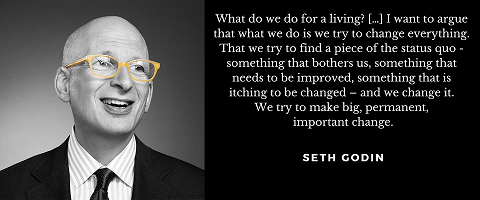
Finally, influence doesn’t stick for long. You must treat it with care. You have to keep showing up. You have to keep listening. You have to keep communicating. And if you do, you won’t just influence. You’ll deliver results over and over again. And if you’re delivering results, you are going to have more influence. Seth Godwin asserts, “All leaders have charisma, but you don’t need charisma to become a leader. Being a leader gives you charisma. [Leaders] commit to the cause. They commit to the [team]. They commit to the people who are there.”
 Shane Elizabeth McCrary Miller